U.S. Nonprofit Returns WWII Hero’s Artifacts to Mindanao — One Year After Informing DPAA of the Only Living Eyewitness, the Agency Still Has Not Contacted Him and Continues to Block Independent Recovery Efforts
By John Bear, Chief of Investigative Research, Asymmetric MIA Accounting Group (AMAG)
May 11, 2026
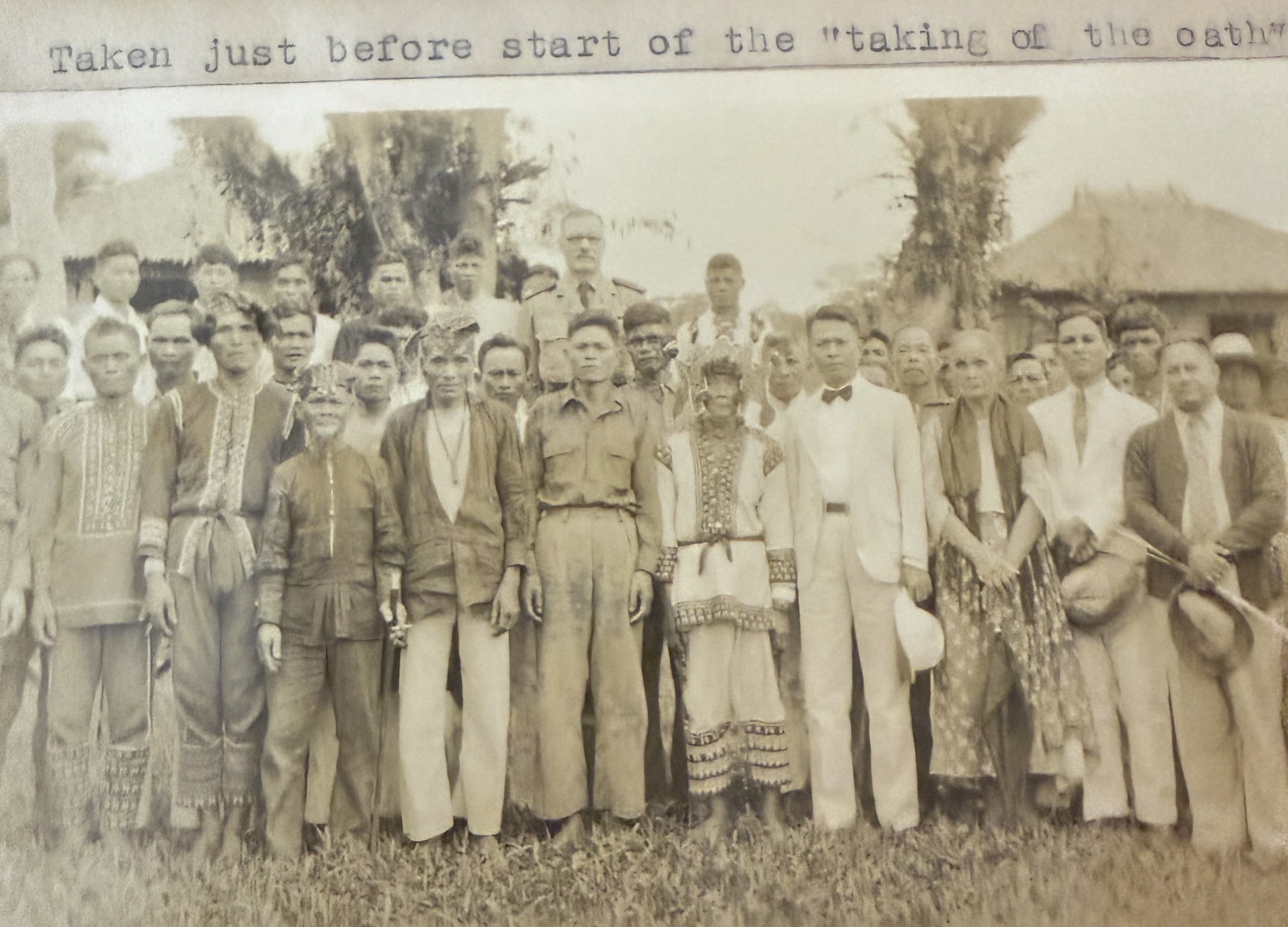
On April 9, 2026 — the Philippines’ Day of Valor (Araw ng Kagitingan) — the Asymmetric MIA Accounting Group (AMAG) proudly returned a priceless collection of Brigadier General Guy O. Fort’s personal artifacts to Mindanao State University–Iligan Institute of Technology (MSU-IIT) in Iligan City, Lanao del Sur. The collection, painstakingly preserved and repatriated by Fort’s step-granddaughter Barbara, includes vintage weapons, brassware, ethnographic items, official documents, photographs, maps, personal diaries, and Philippine Constabulary journals spanning 1904–1942. The two-day public exhibit and formal handover ceremony, attended by BARMM officials, historians, local leaders, and Fort family representatives, marked a historic moment of cultural repatriation and remembrance in the Bangsamoro Autonomous Region in Muslim Mindanao (BARMM).
Commissioner Robert M. Alonto of the Bangsamoro Commission for the Preservation of Cultural Heritage (BCPCH) delivered a powerful address during the ceremony. He described Fort as “an unsung hero” who made Mindanao his home for over four decades, mastering the Meranaw and Magindanaw languages and forging deep bonds with the Moro people. Fort, Alonto emphasized, refused Japanese demands to betray the people of Lanao and the resistance fighters he had helped organize. Knowing full well it would cost him his life, Fort chose loyalty to the Bangsamoro people over collaboration with the Japanese occupiers. In the eyes of the Bangsamoro, Fort is not merely an American officer — he is their hero, their martyr, and a symbol of shared sacrifice. The return of his personal collection stands as a living monument to that unbreakable bond between Fort and the people of Lanao.
This moment of celebration and cultural restitution, however, casts into sharp relief a profound institutional failure by the U.S. Defense POW/MIA Accounting Agency (DPAA). While AMAG and its Bangsamoro partners have built genuine relationships, conducted on-the-ground investigations, secured formal endorsements, and advanced a professional archaeological project, DPAA — the agency statutorily mandated by the American people to provide the fullest possible accounting of U.S. service members missing from past conflicts — has done virtually nothing. DPAA has known for over a year about the only living eyewitness. AMAG has briefed them repeatedly. Philippine authorities have directed AMAG to coordinate with DPAA. Yet DPAA has never contacted the eyewitness, never supported the mission, and continues to cite procedural barriers while time runs out for four American WWII heroes.
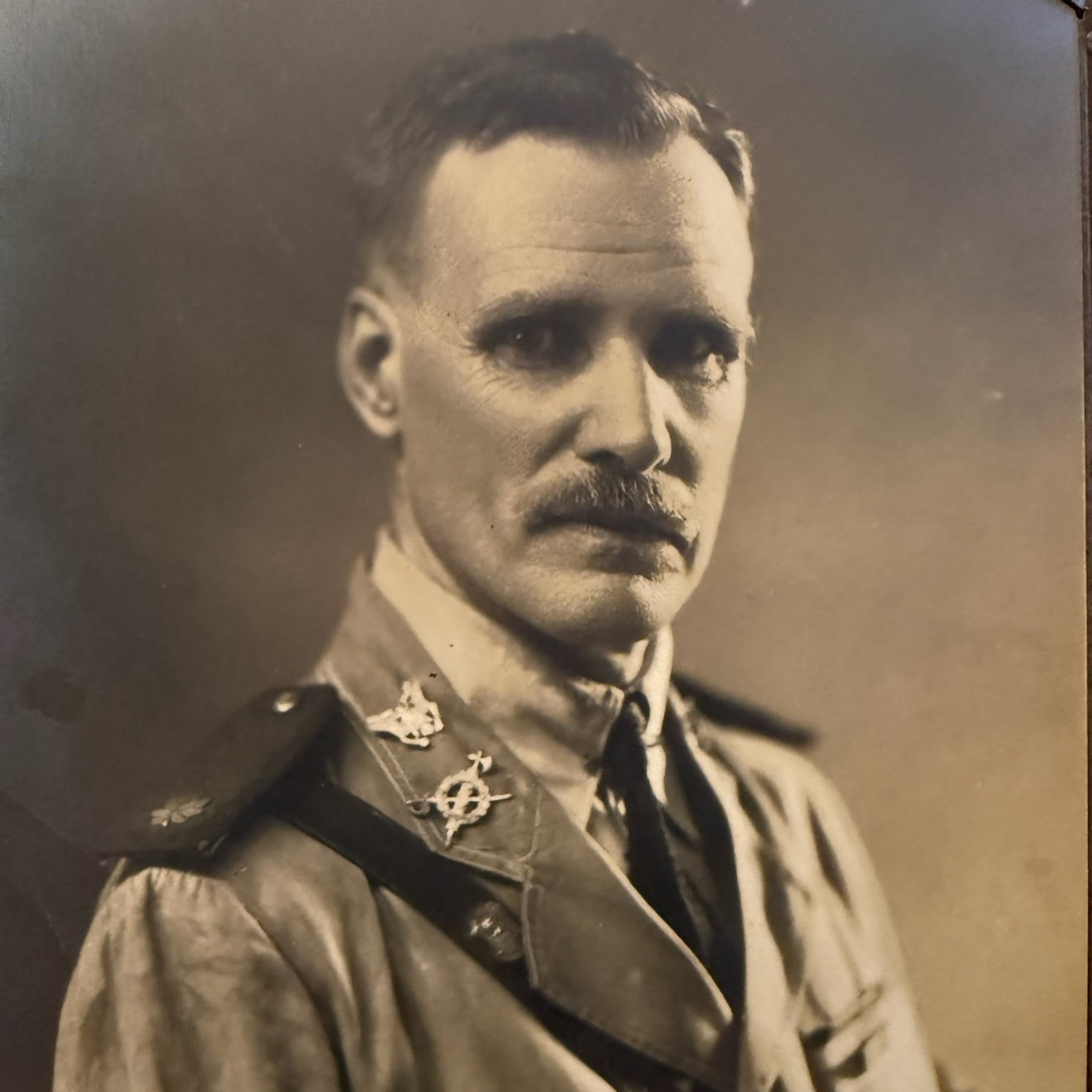
Who Was Brigadier General Guy O. Fort?
Brigadier General Guy O. Fort was born in the United States and enlisted in the U.S. Army cavalry in 1899 deploying to the Philippines. In 1904 he received a commission in the Philippine Constabulary (PC), the elite paramilitary force created by the U.S. civil government to maintain order across the archipelago. Fort rose steadily through the ranks while stationed primarily in Mindanao. A 1930s history of the Constabulary described him as “a regular Daniel Boone who spoke every native dialect of Mindanao,” a fact that earned him profound respect among local Meranaw and Magindanaw leaders.
By 1941, Fort had become a colonel in the Philippine Constabulary. When the Philippine Army was activated in preparation for war, he was promoted to brigadier general and given command of the 81st Infantry Division (Philippine Army), responsible for the defense of the Lanao sector of Mindanao under the U.S. Visayan-Mindanao Force. Fort leveraged his decades-long relationships to organize the Moro Bolo Battalion as an auxiliary force supporting U.S. and Filipino troops. After the fall of Bataan and Corregidor, Fort continued guerrilla operations until complying with General Wainwright’s surrender order on May 27, 1942.
Interned at Camp Keithley in Dansalan (present-day Marawi City), Fort was later transferred to Manila. In the fall of 1942 the Japanese brought him back to Mindanao in an attempt to use him to pacify Moro resistance forces. Fort refused. Historical accounts, Japanese testimony from war crimes trials, and Filipino eyewitness statements converge on the conclusion that he was executed in the vicinity of Camp Keithley between November 11 and 13, 1942, for his refusal to betray the people he had lived among and defended for nearly four decades. His remains have never been recovered. Fort is commemorated on the Walls of the Missing at the Manila American Cemetery and Memorial.
Fort’s Sacrifice: A Deliberate Act of Ultimate Loyalty
General Fort’s sacrifice is not abstract history to the people of Lanao del Sur and the greater Mindanao region. He is remembered as one of their own — a man who, in the final, agonizing hours of his life, knowingly chose his own death over dishonor. Fort understood with crystal clarity that by refusing to betray the Moro guerrilla forces he had personally trained, armed, and fought alongside for decades, he was shielding not only those brave resistance fighters but also countless innocent civilians who would have faced brutal Japanese reprisals, and the future American servicemen who would eventually return to liberate Mindanao. In that moment of ultimate courage, he placed the lives of the people he had come to love as family above his own survival. He chose loyalty to the Bangsamoro and the United States over collaboration with the enemy, sealing his fate with a quiet, unbreakable resolve that still echoes across the hills of Lanao. For the Bangsamoro people, Fort is not merely a hero — he is a martyr whose blood bought their freedom and whose selfless sacrifice remains a sacred, living testament to love, honor, and unwavering fidelity.
The Executions at Camp Keithley, July 3, 1942
The executions that sealed Fort’s fate were part of a brutal retaliation. On July 1, 1942, four American POWs escaped from Camp Keithley. In response, Japanese forces selected three officers and one enlisted man for public execution as a deterrent. Lt. Col. Robert H. Vesey, Capt. Albert H. Price, and 1st Sgt. John L. Chandler were tied to stakes near the camp’s perimeter. A 12-year-old American boy, Benjamin Broadwell Hagans, whose family lived in the area, was forced to watch the entire ordeal. Hagans has described in detail how the men were repeatedly bayoneted. The bodies were reportedly buried nearby, possibly within or adjacent to the Philippine Army’s Campo Ranao base.
Hagans, now 96 and still sharp, is the sole living eyewitness. He has provided AMAG with consistent, corroborated testimony that has been cross-checked against historical records confirming his family’s presence in Mindanao in 1942. DPAA’s own case summary for General Fort explicitly references Hagans’ account and the September 2025 War Horse article that publicized it. DPAA knows the testimony exists. DPAA has never reached out to the man who can point to where the bodies lie.
AMAG’s Independent Mission and the Building of Genuine Partnerships in Bangsamoro
AMAG was founded in 2025 as a disabled combat veteran-owned 501(c)(3) nonprofit to assist families of missing service members from all wars. We operate independently, self-funded, and without any U.S. federal support, including from DPAA. Our work in Mindanao began at the direct request of Fort family members and has been conducted entirely in coordination with Bangsamoro authorities.
In January and April 2026, AMAG teams conducted investigative site visits in Lanao del Sur. We met with local officials, conducted ocular inspections (including GPS mapping at Camp Keithley and the Bubong “Fort Fort” site), and established working relationships with the Bangsamoro Commission for the Preservation of Cultural Heritage (BCPCH). On April 13, 2026, our team — including forensic anthropologist/archaeologist Skylar Joseph and Bangsamoro researcher Ruhollah “Ruh” Al-Husseini J. Alonto — paid a courtesy call on the Municipality of Bubong and inspected the Camp Fort historical site.
On April 20, 2026, Mike Henshaw formally requested BCPCH coordination for a proposed archaeological excavation at the former Camp Keithley site. AMAG pledged full funding, technical expertise, equipment, and logistics, while proposing the University of the Philippines School of Archaeology as the lead implementing institution to ensure academic rigor and local stewardship. Commissioner Robert M. Alonto responded on April 23 with a formal letter affirming support and welcoming a collaborative partnership, stating he would personally coordinate on the ground for proper implementation and alignment with local contexts.
These partnerships are not symbolic. They are operational. Philippine authorities — BCPCH, BARMM provincial and municipal governments, the National Museum of the Philippines, and UP Archaeology — are the lead entities. AMAG provides only the specialized recovery expertise, logistics, and equipment needed to support a Philippine-led effort.
The Camp Keithley Archaeological Project (May-June 2026)
AMAG has developed a comprehensive, non-invasive-to-excavation archaeological project for the Camp Keithley site. The project examines the multi-layered landscape: pre-colonial Meranaw kotas and rancherías, Spanish and American military installations, and its use as a WWII internment and execution site. Rapid urbanization in Marawi makes the identified vacant lot near People’s Park possibly the last intact context for systematic investigation. The project includes archival research, geophysical surveys (GPR, LiDAR, surface survey), targeted test excavations, and oral history documentation. The goal is to recover material evidence that can corroborate or refine historical accounts and potentially locate remains associated with the four executed Americans.
AMAG has also proposed restoration of the historic Camp Keithley monument (targeted for June 1–12, 2026, with unveiling on July 4, 2026 — the 84th anniversary of the executions and the U.S. 250th anniversary). We requested modest U.S. Embassy/JUSMAG support for this heritage project and presented the full slide deck to COL Dan Oh on April 17.
NCCA Directives: Philippine Law Requires DPAA Coordination
Philippine law is clear. On March 3, 2026, the National Commission for Culture and the Arts (NCCA) wrote to Ruh Alonto stating that only DPAA and its recognized partners may conduct recovery of U.S. servicemen remains. Any AMAG activities “must be coordinated first with the DPAA” and require an NCCA permit. On April 28, 2026, NCCA wrote directly to Mike Henshaw, classifying the planned work as regulated archaeology and directing coordination with DPAA and the National Museum of the Philippines before any permit would be processed. AMAG has complied with these directives at every step.
A Comprehensive Timeline of AMAG’s Outreach to DPAA and the U.S. Government
AMAG has maintained relentless, transparent communication with DPAA and U.S. diplomatic channels, including multiple in-person meetings at DPAA headquarters in Arlington, Virginia:
- May 2, 2025: Mike Henshaw held an in-person meeting at DPAA headquarters. He formally announced AMAG’s involvement with the Fort family and informed officials that further detailed information on the Camp Keithley cases would be forthcoming. Other cases were also discussed.
- May 11, 2025: Formal proposal submitted to DPAA Indo-Pacific Directorate detailing eyewitness testimony and Fort research. Request for diplomatic and forensic support.
- May 12, 2025: DPAA’s Rob Goeke acknowledges receipt, forwards internally, but states AMAG is not a partner and DPAA cannot approve work or grant access.
- March 19, 2026: Mike Henshaw held an in-person meeting at DPAA headquarters with Jennifer Nasarenko, Heather Harris, and Rocky Gillette in attendance. The Mindanao mission and Camp Keithley cases were discussed in detail.
- April 15, 2026: Mike Henshaw emails U.S. Embassy Manila (ACS InfoManila and ManilaPress) requesting meeting with Defense Attaché, JUSMAG, Political-Military Affairs, and Public Affairs regarding monument restoration and MIA coordination.
- April 16, 2026: JUSMAG Philippines confirms COL Dan Oh available for noon meeting on April 17 at the Embassy Chancery. Multiple key Embassy personnel cc’d.
- April 17–18, 2026: Meeting with JUSMAG occurs. AMAG presents full Camp Keithley Archaeological Project slide deck.
- April 18, 2026: John Bear and Mike Henshaw email DPAA historian Dr. Gregory Kupsky requesting briefing on new Camp Keithley information, monument status, and Fort descendant DNA leads. Kupsky cites limited 18-hour Manila layover; no meeting scheduled.
- April 20, 2026: Formal letter to Commissioner Alonto requesting BCPCH support for excavation, proposing UP Archaeology as lead.
- April 23, 2026: Commissioner Alonto responds affirmatively, welcoming partnership and ground-level coordination.
- April 28, 2026: NCCA letter to Mike Henshaw reiterates requirement to coordinate with DPAA for permit.
- April 30, 2026: Mike Henshaw emails DPAA Director McKeague requesting written clarification on four points to facilitate Philippine permit processing. Response pending as of publication.
Throughout this period, AMAG has operated transparently, never implying official U.S. government affiliation, and has shared non-sensitive updates publicly via media and our own recaps.
DPAA’s Mandate and Its Failure to Support the Mindanao Mission
The Defense POW/MIA Accounting Agency exists solely to provide the fullest possible accounting of U.S. service members missing from past conflicts. Its mission is mandated by the American people and Congress. DPAA’s own case summary for Fort acknowledges the strength of the Camp Keithley leads, cites Benjamin Hagans by name as the eyewitness, references the War Horse article, and confirms three nearby unknowns were exhumed in 2020 (with analysis ongoing due to poor condition and DNA challenges). DPAA has known about Hagans for over a year.
In The War Horse interview with DPAA historian Dr. Greg Kupski and Partnerships Director Rocky Gillette, Gillette stated explicitly that DPAA “is not going to hinder anybody” from doing work that could bring family closure. “At the end of the day, if they’re successful, a family will potentially get some closure, and that’s a wonderful thing.” Yet DPAA has provided zero support — no interview with the eyewitness, no coordination on permits, no field investigation, and no assistance despite NCCA’s explicit direction to work through them.
Instead, DPAA repeatedly cites State Department travel advisories and internal process. The three unknowns disinterred in 2020 (partly due to family pressure and litigation) have not been linked to the Keithley victims. DPAA now points to “insufficient Family Reference Samples” as a barrier, even as AMAG has located potential Fort descendants in the Philippines through his own diaries and is facilitating additional DNA. This appears to be an excuse to delay rather than a good-faith effort to fulfill the accounting mandate.
The Race Against Time
Urbanization in Marawi is accelerating. The identified site near People’s Park may be the last intact context for archaeological recovery. Benjamin Hagans is 96. The four executed Americans have waited 84 years. AMAG’s June 2026 mission, fully funded and Philippine-led, represents a narrow window of opportunity. DPAA’s inaction risks permanent loss of these cases.
Conclusion: A Call for Accountability
AMAG has done everything asked of us: built partnerships, secured endorsements, complied with Philippine law, briefed DPAA repeatedly, and proposed a professional, transparent archaeological effort. Philippine authorities are the lead; AMAG supports with expertise, logistics, and funding. The only missing piece is meaningful DPAA engagement.
The American people, through Congress, created DPAA to bring closure to families. That mandate is not being fulfilled in Mindanao. The U.S. Congress must examine why DPAA has failed to contact the only living eyewitness, failed to coordinate as directed by Philippine authorities, and failed to support a credible independent effort that could succeed where official channels have not.
The families of Brig. Gen. Guy O. Fort, Lt. Col. Robert H. Vesey, Capt. Albert H. Price, and 1st Sgt. John L. Chandler — and the Bangsamoro people who still honor Fort as one of their own — deserve answers and action. AMAG will continue the work. We invite Congress to ensure DPAA does the same.
About AMAG
The Asymmetric MIA Accounting Group is a disabled combat veteran-owned 501(c)(3) all-volunteer nonprofit founded in 2025 to assist families of military personnel missing in action from all wars. We operate independently, self-funded, and without any U.S. federal support. We work at the request of families and in genuine partnership with host-nation authorities where official efforts cannot reach.
All facts in this post are drawn from primary documents: AMAG’s May 2025 proposal and subsequent correspondence, DPAA case summaries (2024/2026), NCCA letters of March 3 and April 28 2026, the Camp Keithley Archaeological Project slide deck presented to JUSMAG, BARMM/BCPCH correspondence, Embassy/JUSMAG emails, The War Horse DPAA interview, and contemporaneous media reporting.
Investigative Researcher & Host of Stories of Sacrifice Podcast
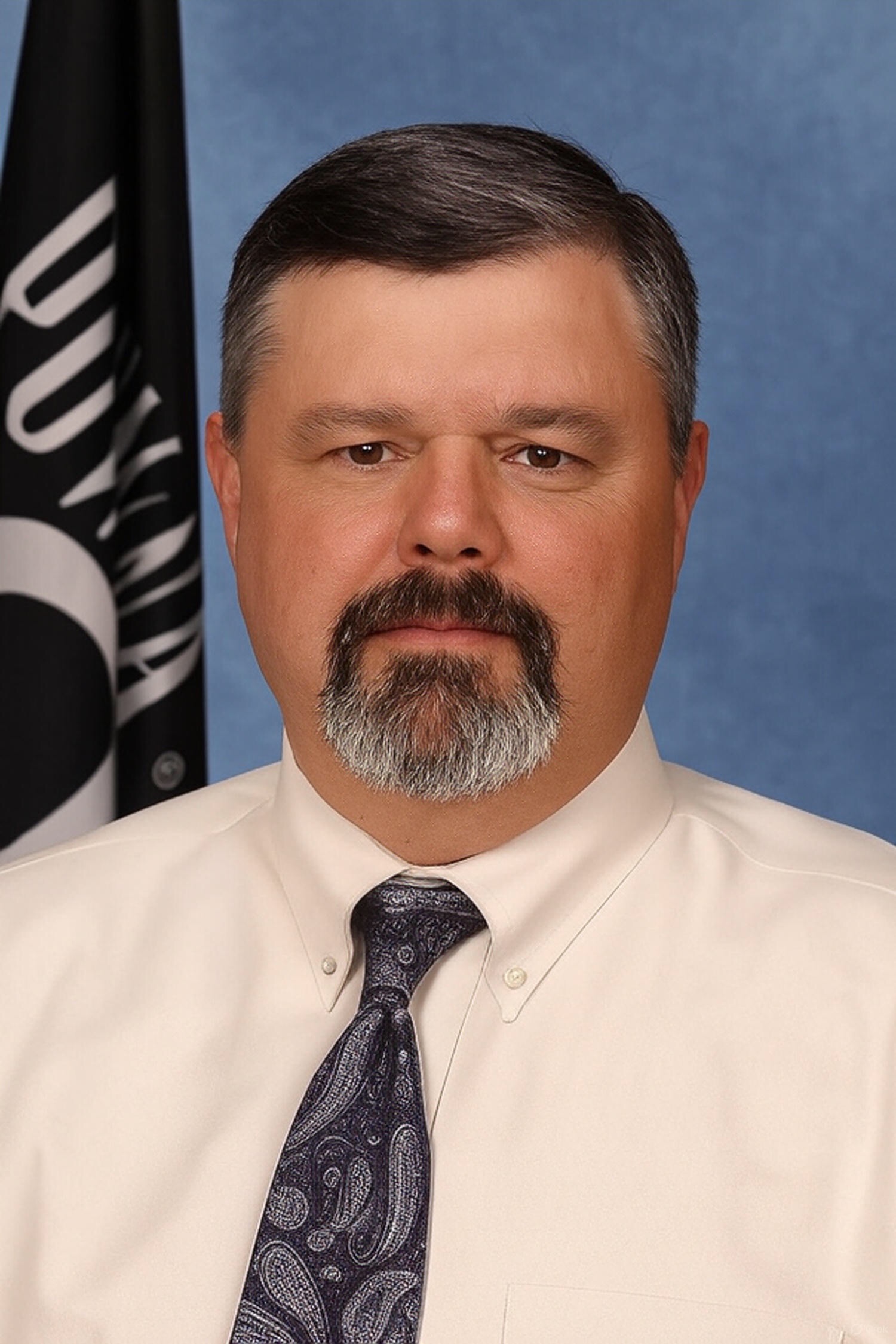
John Bear is an accomplished investigator and forensic genealogist with over 20 years of experience specializing in World War II, Korea, and Vietnam War POW/MIA cases. He has honed forensic-level skills in open-source intelligence (OSINT) and archival research, bolstered by coursework in Advanced Research Methods and Databases for Historians. Inspired by the loss of his uncle, a WWII POW/MIA identified posthumously in the Philippines, John volunteers directly with families of the missing to provide answers and closure. As a key member of the Asymmetric MIA Accounting Group (AMAG), he works directly with MIA families to support projects alongside Military Service Casualty Officers, DPAA Historians, and military intelligence experts. Through his contributions to the Cabanatuan POW Camp, Philippine Hellship Project, and Bataan Death March, John’s efforts have led to over 350 potential WWII identifications through Family Reference Sample (FRS) DNA collection. His investigation into the Vietnam War’s Baron 52 incident uncovered compelling OSINT-based evidence suggesting crew survival, and his work on WWII unrecovered MIAs on Mindanao has generated critical leads. Through his podcast, Stories of Sacrifice: American POW/MIAs, John amplifies families’ stories, ensuring the legacies of the missing are honored.
Baron 52 Docu series Podcast Link: https://www.storiesofsacrifice.org/category/baron-52/

Reassessment of the Baron 52 Incident (REFNO 1983) – July 2026