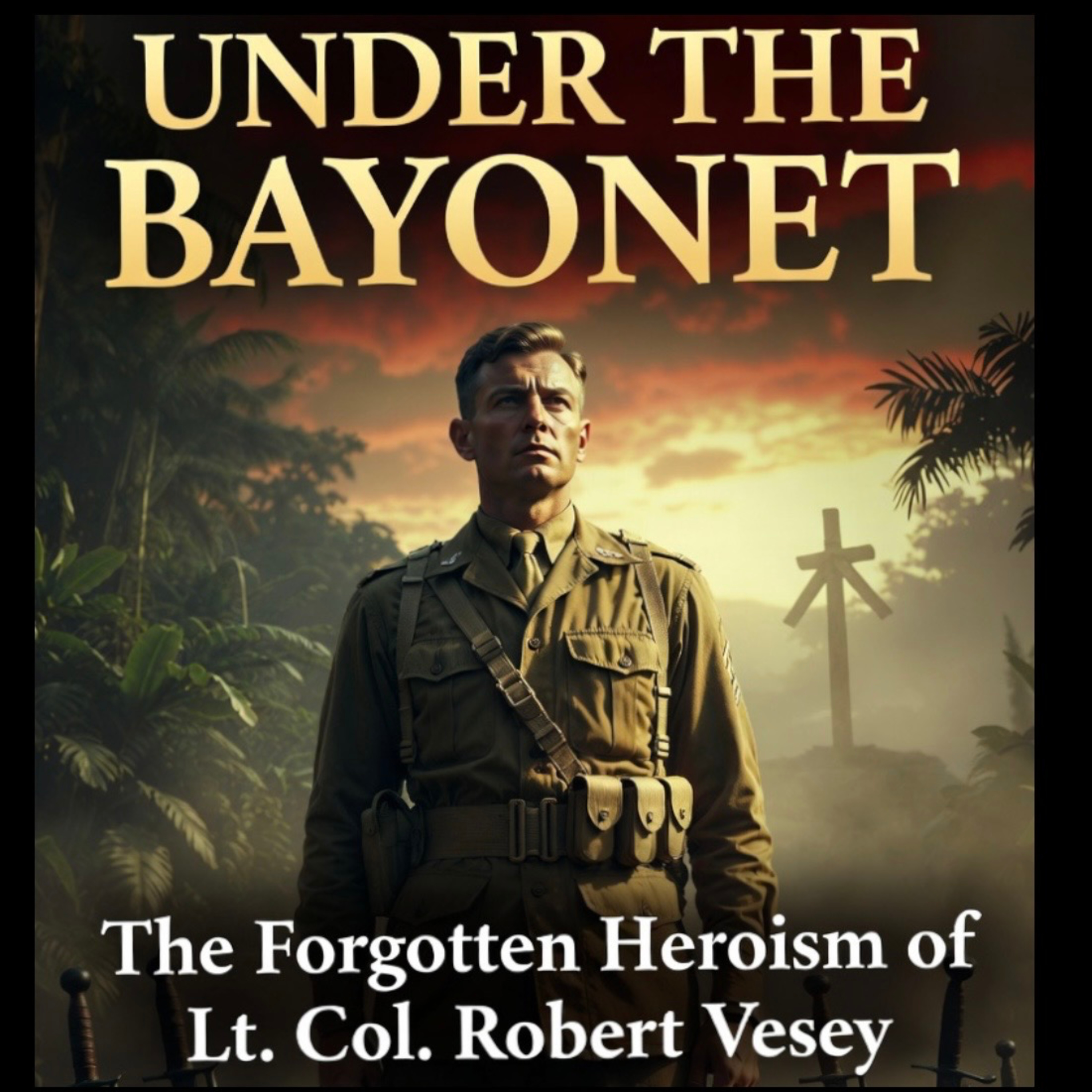
Duty, Honor, Country—Even Unto Death: The Story of Lt. Col. Robert H. Vesey
In the vast tapestry of American military history, certain threads shine brighter than others—woven from acts of profound courage that transcend the battlefield and echo through generations. One such thread belongs to Lieutenant Colonel Robert Hale Vesey, a 1918 West Point graduate whose life and death exemplify the Academy’s timeless creed of Duty, Honor, Country.
Vesey’s story is not merely one of service in distant lands. It is the story of an unbreakable bond of brotherhood that led him to make the ultimate sacrifice—volunteering his own life to save that of Brigadier General Guy O. Fort during a brutal Japanese execution in a prisoner-of-war camp. This selfless decision, made in the face of unimaginable horror, spared Fort from immediate death and stands as a testament to the depths of heroism possible in the human spirit.
Today, as we trace Vesey’s journey from the Texas heartland to West Point, through devoted family life and steady military service, into the desperate Battle of Mindanao and the horrors of Camp Keithley, we also confront his family’s enduring quest for closure—and the ongoing mission to bring him home. Vesey’s actions that day in 1942 are not only worthy of remembrance; they represent the pinnacle of valor under extreme duress and deserve serious consideration for the nation’s highest honor, the Congressional Medal of Honor.
Robert Hale Vesey was born on February 6, 1899, in Kaufman County, Texas, to John Vesey and Adeline Sykes Allen Vesey. Family ties stretched to Arkansas and Illinois, instilling resilience and patriotism. He entered the United States Military Academy at West Point as part of the accelerated Class of November 1918, graduating as a Second Lieutenant of Infantry just as World War I ended.
He married Effie M. Bridewell of Hope, Arkansas, in 1920. They built a family and welcomed two daughters. Postwar letters in his Individual Deceased Personnel File reveal the depth of that bond—Effie’s unwavering love and the daughters’ pride in their father’s service. Even after his death, Effie (later Mrs. John M. Allison) continued advocating for his memory. In an August 15, 1945 letter to the War Department she wrote: “I am anxious to know if any information has been received concerning my husband, Lt. Col. Robert H. Vesey… Please advise me if his death has been confirmed.” Her persistence continued in 1946 requests for his Purple Heart and medals, always seeking the full circumstances of his death and any personal effects. Those letters chronicle a family’s unbroken commitment to truth and honor.
Vesey’s career was one of quiet, steady dedication. By the late 1930s he had risen to Lieutenant Colonel (service number O-012217) and was serving in the Philippines. He commanded the 73rd Infantry Regiment (Philippine Army) within the 71st Division under USAFFE. On Corregidor and later in Mindanao he helped integrate American and Filipino forces, building cohesion ahead of invasion. He also formed personal bonds—one with Major Broadwell Hagans, whose family plantation he visited, endearing himself to the major’s young son, Ben.
When Japan struck on December 7, 1941, Vesey was thrust into the maelstrom. In the Battle of Mindanao, his 73rd Infantry fought alongside Brigadier General Guy O. Fort’s 81st Infantry Division in the Lanao sector. Japanese forces landed at Parang and Cotabato on April 29, 1942. Vesey and Fort’s commands employed defense-in-depth, ambushes, and demolitions, inflicting heavy casualties. By mid-May supplies were exhausted. General Wainwright’s surrender order from Corregidor reached Mindanao; Sharp capitulated on May 27 to spare further bloodshed. Vesey and his men laid down their arms with honor.
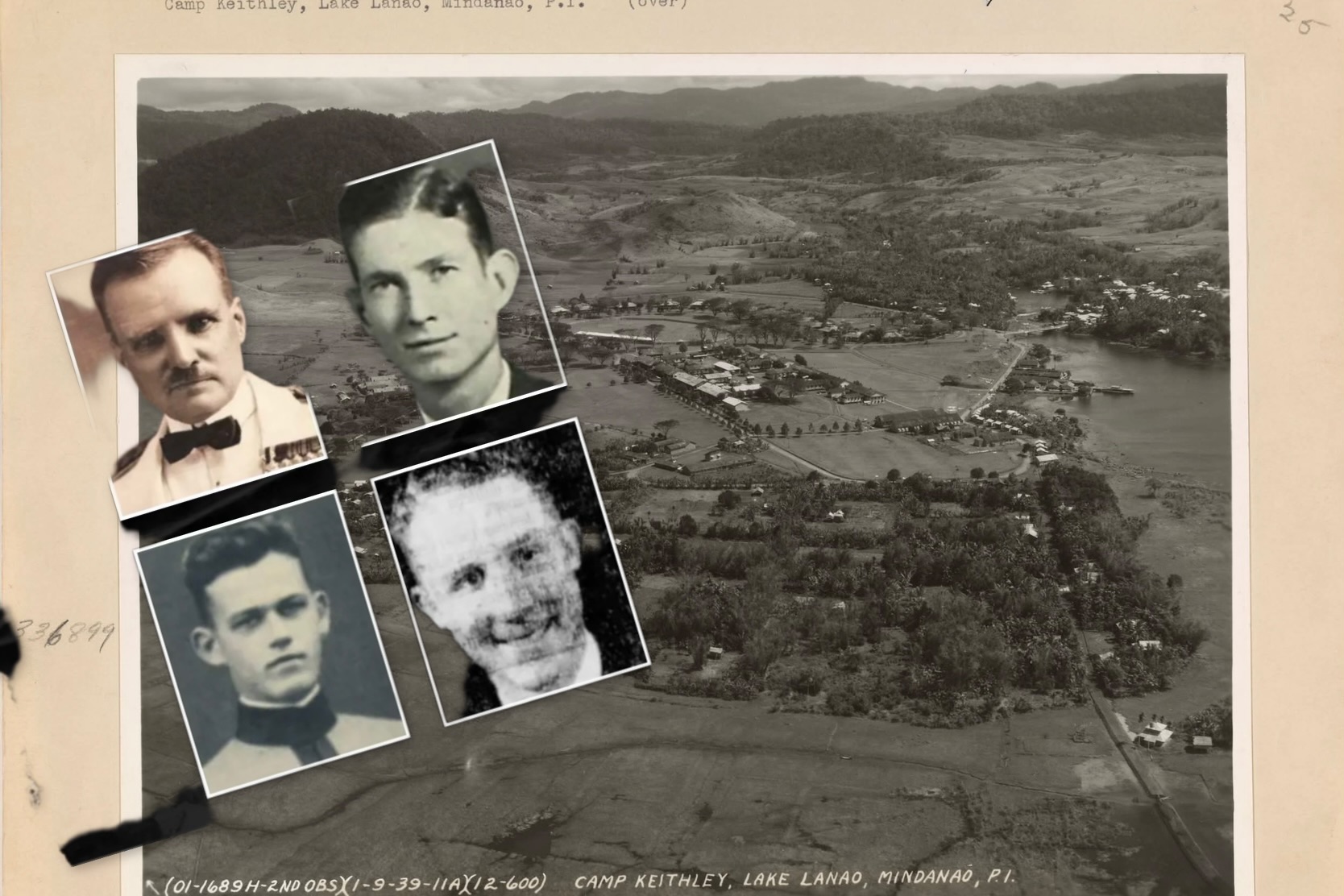
They were interned at Camp Keithley in Dansalan (now Marawi), Lanao Province—a former U.S. installation turned site of suffering. Prisoners endured watery rice, disease, and arbitrary brutality. On July 3, 1942, after four American POWs escaped, Lieutenant Colonel Yoshinari Tanaka ordered retaliatory executions. The Japanese selected Brigadier General Guy O. Fort, Captain Albert H. Price of Alabama, and First Sergeant John L. Chandler of Louisiana.
The assembled prisoners were forced to watch. When Fort was bound to a stake near Signal Hill, Vesey—true to his West Point oath—stepped forward without hesitation. “Cut General Fort down,” he commanded. “I’ll take his place.”
Vesey was tied in Fort’s stead. Alongside Price and Chandler, he endured prolonged agony. The guards bayoneted the three men methodically, not for swift death but to maximize suffering. Blood soaked the earth. Screams echoed across the camp. Vesey, in particular, clung to life for hours—his body ravaged, his spirit unbroken. Twelve-year-old Ben Hagans witnessed it all. The images haunted him for eight decades.
Fort was spared that day. He would be executed months later for refusing to order his former Moro fighters to lay down their arms. Tanaka was later tried, convicted, and hanged for these and other war crimes. Justice for the victims, however, remained incomplete.
The following day—July 4, 1942—the survivors faced the Iligan Death March: 25–36 kilometers under brutal sun, bound, without food or water. Stragglers were executed. It was a cruel mockery of American independence.
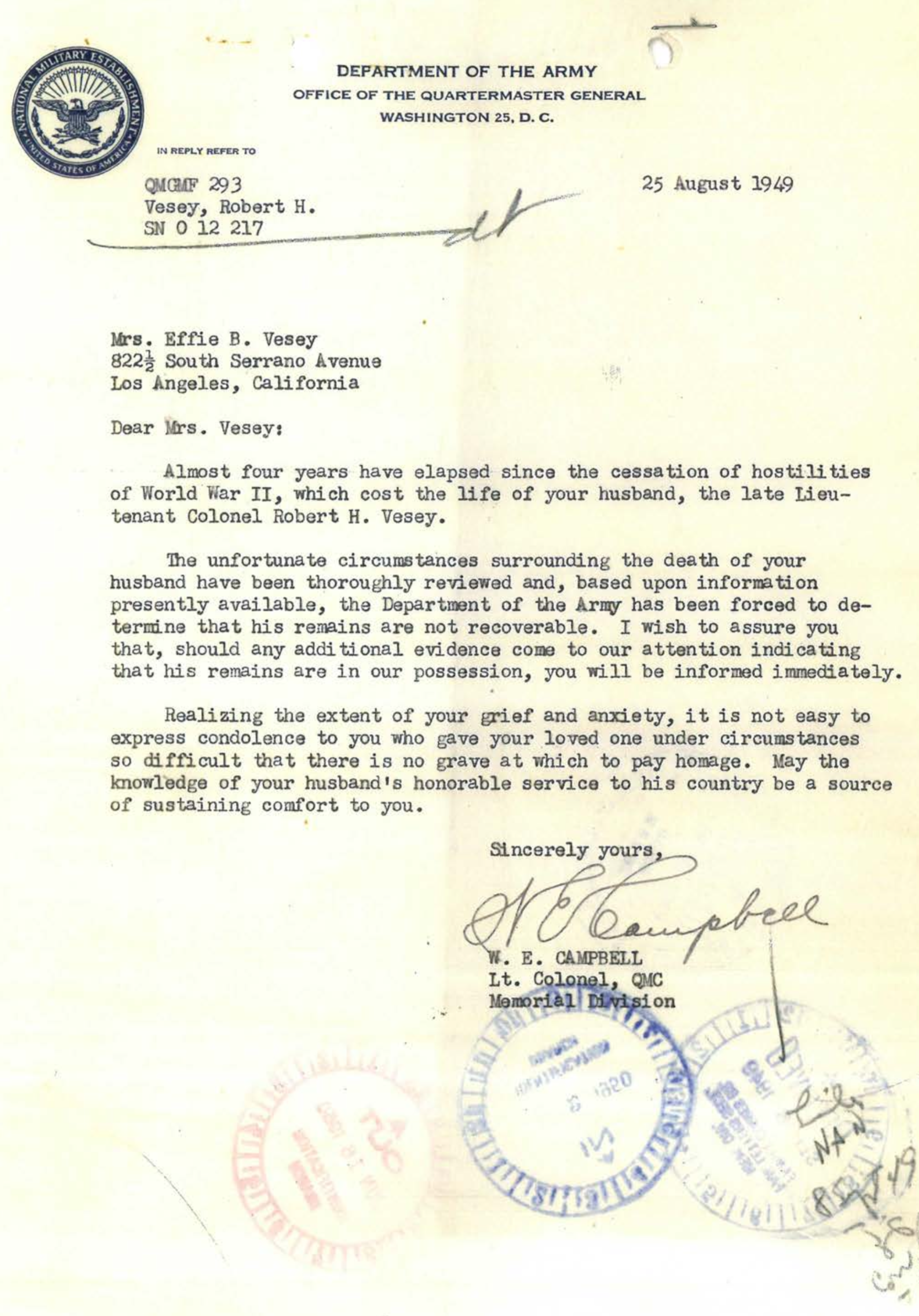 Vesey’s death left a lifelong void. Effie’s letters document a widow’s anguish—rumors of execution, pleas for confirmation, requests for medals and effects, and desperate searches for his burial place. The daughters grew up without their father. In 1947–1948, AGRS search parties under Sgt. Weyman L. McGuire scoured the former Camp Keithley. They found scattered bones but nothing identifiable; the area was under cultivation and grave markers had been removed. Native witnesses confirmed the three men had been marched out of camp for execution.
That quest continues today through the Asymmetric MIA Accounting Group (AMAG). Leveraging Ben Hagans’ precise testimony, Tanaka trial records, and 1930s aerial imagery, AMAG has pinpointed high-probability burial sites near the Agus River inside the former Camp Keithley area—now within a Philippine Army installation in Marawi. Ground-penetrating radar and forensic expertise will guide recovery of Vesey, Fort, Price, and Chandler after more than 83 years.
AMAG works in close partnership with families, including Barbara Fox (Fort family), and with local stakeholders. Every effort is funded by donations and driven by the conviction that these heroes deserve to come home with full military honors.
Lieutenant Colonel Robert Hale Vesey’s legacy is a beacon. His sacrifice reminds us that true valor lies in choices made when all hope seems lost—choices that affirm the very meaning of Duty, Honor, Country.
As we pursue his repatriation and advocate for the highest recognition his actions merit, we honor not only a soldier, but a husband, father, and West Point exemplar whose creed lives on.
Thank you for reading. Let’s bring them home.
— John Bear, Chief of Research, Asymmetric MIA Accounting Group (AMAG)
please consider donating to the recovery mission: https://www.zeffy.com/en-US/donation-form/support-amags-mission-mindanao-forgotten-graves-false-closures-and-new-hope
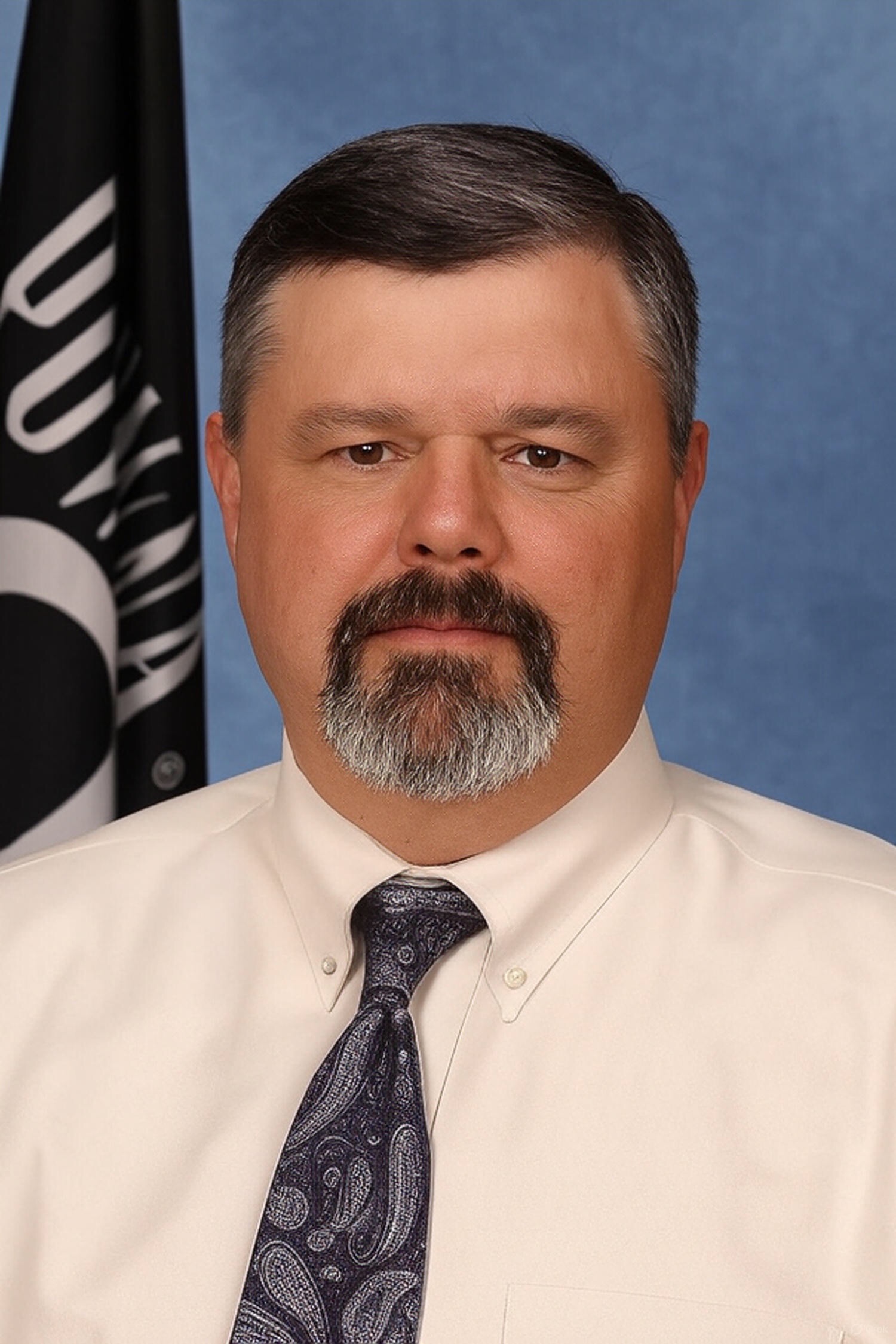
Investigative Researcher & Host of Stories of Sacrifice Podcast
John Bear is an accomplished investigator and forensic genealogist with over 20 years of experience specializing in World War II, Korea, and Vietnam War POW/MIA cases. He has honed forensic-level skills in open-source intelligence (OSINT) and archival research, bolstered by coursework in Advanced Research Methods and Databases for Historians. Inspired by the loss of his uncle, a WWII POW/MIA identified posthumously in the Philippines, John volunteers directly with families of the missing to provide answers and closure. As a key member of the Asymmetric MIA Accounting Group (AMAG), he works directly with MIA families to support projects alongside Military Service Casualty Officers, DPAA Historians, and military intelligence experts. Through his contributions to the Cabanatuan POW Camp, Philippine Hellship Project, and Bataan Death March, John’s efforts have led to over 350 potential WWII identifications through Family Reference Sample (FRS) DNA collection. His investigation into the Vietnam War’s Baron 52 incident uncovered compelling OSINT-based evidence suggesting crew survival, and his work on WWII unrecovered MIAs on Mindanao has generated critical leads. Through his podcast, Stories of Sacrifice: American POW/MIAs, John amplifies families’ stories, ensuring the legacies of the missing are honored.
Baron 52 Docu series Podcast Link: https://www.storiesofsacrifice.org/category/baron-52/
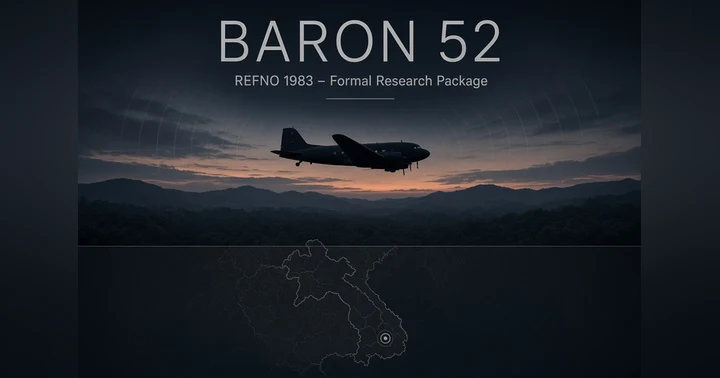
Baron 52: New Vietnamese Sources and the Case for Technical Review