The Ultimate Sacrifice: Lieutenant Colonel Robert Hale Vesey and the Embodiment of Duty, Honor, Country
In the vast tapestry of American military history, certain threads shine brighter than others, woven from acts of profound courage that transcend the battlefield and echo through generations. One such thread belongs to Lieutenant Colonel Robert Hale Vesey, a 1918 West Point graduate whose life and death exemplify the Academy’s timeless creed of Duty, Honor, Country. Vesey’s story is not just one of service in distant lands but of an unbreakable bond of brotherhood that led him to make the ultimate sacrifice—volunteering his life to save that of Brigadier General Guy O. Fort during a brutal execution in a Japanese prisoner-of-war camp. This selfless decision, made in the face of unimaginable horror, saved Fort from immediate death and stands as a testament to the depths of heroism possible in the human spirit. Today, as we delve into Vesey’s background, his devoted family life, his military career, the intense Battle of Mindanao, and the harrowing details of his final moments, we also reflect on his family’s enduring quest for closure and the ongoing efforts to repatriate his remains. Vesey’s actions that fateful day in 1942 are not only worthy of remembrance but deserving of the nation’s highest honor, the Congressional Medal of Honor, and should be seriously considered for posthumous recognition, as they represent the pinnacle of valor under extreme duress.
Robert Hale Vesey was born on February 6, 1899, in Kaufman County, Texas, to John Vesey and Adeline Sykes Allen Vesey, in a time when America was expanding its horizons and facing new challenges on the global stage. His early life in the American heartland, with family ties extending to Arkansas and Illinois, fostered a sense of resilience and patriotism that would define his path. Growing up in modest circumstances, Vesey developed the intellectual rigor and moral fortitude that propelled him toward military excellence. His journey led him to the United States Military Academy at West Point, where he joined the accelerated Class of November 1918 during the closing months of World War I. This wartime cohort was expedited to bolster Allied forces, and Vesey graduated as a Second Lieutenant in the Infantry, ready to embrace the responsibilities of leadership.
Amid his rising career, Vesey found personal fulfillment in marriage to Effie B. Vesey, a partnership that anchored him through the uncertainties of service. Together, they built a family, welcoming two daughters who brought joy and purpose to his life. Postwar correspondence in his Individual Deceased Personnel File (IDPF) reveals the depth of this bond, with Effie’s letters expressing unwavering love and the daughters’ pride in their father’s service. Even after Vesey’s death, Effie—later remarried as Mrs. John M. Allison—continued to advocate for her former husband’s memory, her inquiries reflecting a family’s unyielding commitment to honor and truth. In one poignant letter dated August 15, 1945, Effie wrote to the War Department, “I am anxious to know if any information has been received concerning my husband, Lt. Col. Robert H. Vesey… Please advise me if his death has been confirmed.” Her persistence is evident in follow-up communications, such as a 1946 request for his Purple Heart and other medals, where she expressed, “I would appreciate any information you can give me regarding the circumstances of his death.” These letters paint a picture of a family’s heartache, with Effie tirelessly seeking details about his fate, including rumors of execution and pleas for his personal effects. The daughters, too, were left with the void of a father’s absence, their lives forever altered.
Vesey’s military trajectory was one of steady dedication. Commissioned at World War I’s end, he gained foundational experience in infantry operations, though with limited frontline action. The interwar years saw him progress through assignments that honed his skills in command and adaptation. By the late 1930s, he had achieved the rank of Lieutenant Colonel, service number O-012217, and was deployed to the Philippines—a pivotal Pacific outpost amid escalating Japanese aggression. There, he served on Corregidor Island, contributing to defensive fortifications, and later commanded the 73rd Infantry Regiment (Philippine Army) within the 71st Division under USAFFE. His leadership fostered integration between American and Filipino troops, building cohesion in the face of invasion. Vesey also formed personal connections, such as with Major Broadwell Hagans, whose family plantation he visited, endearing himself to Hagans’ young son, Ben—a boy who would one day bear witness to his heroism.
As World War II ignited with Japan’s assault on Pearl Harbor on December 7, 1941, Vesey was thrust into the maelstrom of the Pacific campaign. The Battle of Mindanao, part of the broader Philippine defense, unfolded as a desperate stand against overwhelming odds. Following the initial invasions, Japanese forces targeted Mindanao in April 1942, aiming to secure the southern Philippines. Vesey’s 73rd Infantry Regiment, integrated into the 71st Division, was tasked with defending key sectors alongside Brigadier General Guy O. Fort’s 81st Infantry Division, responsible for the Lanao sector. Fort, a seasoned officer with deep roots in the Philippine Constabulary since 1904, had activated his division under the Visayan-Mindanao Force (VMF) commanded by Major General William Sharp. Leveraging his expertise, Fort organized the Moro Bolo Battalion, an auxiliary of fierce Muslim Moro fighters armed with traditional bolos and U.S. rifles, to bolster defenses.
Combat erupted on April 29, 1942, when Japanese troops landed at Parang and Cotabato, advancing toward Davao and Lanao. Vesey’s forces, alongside Fort’s, employed defense in depth, guerrilla warfare, ambushes, and road demolitions to inflict heavy casualties—estimated at over 500 Japanese killed or wounded in the initial clashes. The 81st Division, under Fort, fought tenaciously, holding positions around Lake Lanao and delaying the enemy for weeks. However, by May, the situation deteriorated as supplies dwindled and Japanese reinforcements arrived. On May 10, General Jonathan Wainwright’s general surrender order from Corregidor reached Sharp, but Mindanao’s forces continued resisting until May 27, when Sharp capitulated to avoid further bloodshed. Vesey and his men, exhausted but resolute, laid down arms, marking the end of organized resistance in the southern Philippines. This battle, though a defeat, showcased the valor of Filipino-American forces, buying time for Allied preparations elsewhere in the Pacific.
Captured, Vesey and his comrades—46 Americans and 300 Filipinos—were interned at Camp Keithley in Dansalan, Lanao Province (now Marawi City), a former U.S. base repurposed into a site of suffering. The camp’s horrors tested the limits of human endurance: prisoners survived on meager watery rice, supplemented by whatever vermin they could catch, while disease ravaged their ranks and guards meted out arbitrary beatings. In this abyss, Vesey’s character shone brightest. On July 3, 1942, after four prisoners escaped, Lieutenant Colonel Yoshinari Tanaka ordered retaliatory executions, selecting four officers, including Brigadier General Guy O. Fort. The captives were assembled to witness the terror, a psychological weapon to crush resistance.
Ben Hagans, the 12-year-old son of Vesey’s friend Major Hagans, provided a chilling eyewitness account that has endured for over eight decades. Interned with his family, young Ben watched as the Japanese guards tied the doomed men to wooden stakes near Signal Hill, a stark promontory overlooking the camp. When Fort was bound, Vesey—true to his West Point oath—stepped forward without flinching. “Cut General Fort down,” he commanded. “I’ll take his place.” This declaration, born of profound duty and honor, spared Fort but condemned Vesey. Alongside Captain Albert Price and First Sergeant John Chandler, Vesey endured a protracted agony. The guards bayoneted them methodically, not for quick death but to prolong suffering, their blades piercing flesh repeatedly as blood soaked the earth. Hagans recounted the victims’ screams, a symphony of torment that haunted the boy and left indelible scars. Vesey, in particular, clung to life for several hours, his body ravaged but his resolve unbroken, embodying the creed that compelled him to sacrifice everything for a comrade. This act of valor, saving a fellow officer in the face of certain death, is deserving of the Congressional Medal of Honor and should be considered for posthumous award, recognizing the pinnacle of selfless bravery under enemy captivity.
The following day, July 4, 1942—a cruel mockery of American independence—the survivors faced the Iligan Death March, bound and marched 25-36 kilometers without sustenance, with stragglers executed mercilessly. This march claimed more lives, underscoring the relentless cruelty of their captors. Tanaka’s trial in 1948 exposed these crimes, leading to his conviction and hanging, but the justice was hollow for those lost.
Vesey’s death left a profound void for his family. Effie’s IDPF letters reveal a widow’s anguish: inquiries about his fate, requests for medals and effects, and persistent demands for burial details. She detailed rumors of his execution and sought confirmation, her words a poignant chronicle of grief. The daughters, too, were left in limbo, their father’s absence a shadow over their lives. The family’s search for his burial location became a lifelong pursuit, documented in correspondence with the Army and AGRS, pleading for any clue to his resting place. A 1948 AGRS statement from Sgt. Weyman L. McGuire describes search parties in April and June 1947 at the former Camp Keithley, finding scattered bones but not enough for identification. McGuire noted the area was under cultivation, with grave signs removed, and based the execution details on native statements: “That when Col. Vesey was executed by the Japanese on 3 July 1942, he was not killed in the POW Camp at Dansalan, but at the rear of and adjacent to Camp Keithley. This is based on statements made by native inhabitants who saw Col. Vesey, Capt. Price and Sgt. Chandler marched out of the POW Camp for executions, although these native inhabitants did not see the actual executions.” This report highlights the challenges in recovery, fueling the family’s ongoing quest.
Today, that quest continues through the dedicated work of organizations like Asymmetric MIA Accounting Group (AMAG). Leveraging Ben Hagans’ detailed testimony and Tanaka trial records, we’ve pinpointed potential burial sites near the Agus River within Marawi’s Philippine Army base. Using ground-penetrating radar and forensic expertise, we aim to recover Vesey, Fort, Price, and Chandler’s remains after 83 years. Collaborating with families like Barbara Fox, AMAG’s mission is to repatriate these heroes, transforming memorials into graves with full honors. Funded by donations, every effort honors their sacrifice, ensuring dignity and closure.
Lieutenant Colonel Robert Hale Vesey in uniform, circa 1940s. (Courtesy of West Point Association of Graduates)
The Tablets of the Missing at the Manila American Cemetery, where Vesey’s name is inscribed among thousands of unrecovered WWII heroes. (Photo by John Bear)
Ben Hagans, the eyewitness to Vesey’s execution, skydiving on his 96th birthday—a testament to his enduring spirit. (Video courtesy of Skydive Lake Tahoe)
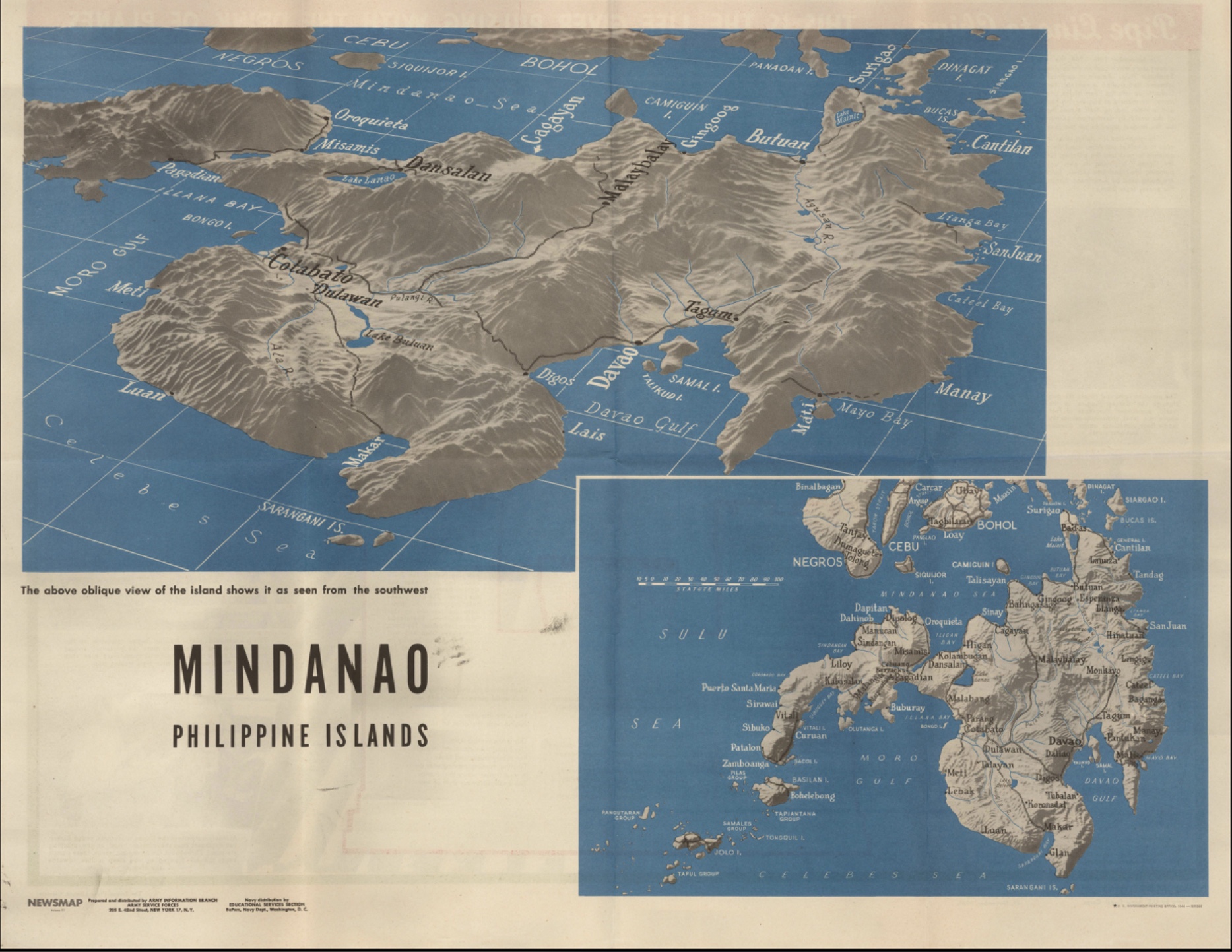
Historical map of Camp Keithley and Signal Hill, the site of the executions, overlaid with modern Marawi for AMAG’s recovery planning. (Courtesy of AMAG Archives)
Lieutenant Colonel Robert Hale Vesey’s legacy endures as a beacon of heroism. His sacrifice reminds us that true valor lies in choices made when hope seems lost. As we pursue his repatriation, we honor not just a soldier, but a father, husband, and West Point exemplar whose creed lives on.
Thank you for reading. Let’s bring them home.
— John Bear, Chief of Research, AMAG
Investigative Researcher & Host of Stories of Sacrifice Podcast
John Bear is an accomplished investigator and forensic genealogist with over 20 years of experience specializing in World War II, Korea, and Vietnam War POW/MIA cases. He has honed forensic-level skills in open-source intelligence (OSINT) and archival research, bolstered by coursework in Advanced Research Methods and Databases for Historians. Inspired by the loss of his uncle, a WWII POW/MIA identified posthumously in the Philippines, John volunteers directly with families of the missing to provide answers and closure. As a key member of the Asymmetric MIA Accounting Group (AMAG), he works directly with MIA families to support projects alongside Military Service Casualty Officers, DPAA Historians, and military intelligence experts. Through his contributions to the Cabanatuan POW Camp, Philippine Hellship Project, and Bataan Death March, John’s efforts have led to over 350 potential WWII identifications through Family Reference Sample (FRS) DNA collection. His investigation into the Vietnam War’s Baron 52 incident uncovered compelling OSINT-based evidence suggesting crew survival, and his work on WWII unrecovered MIAs on Mindanao has generated critical leads. Through his podcast, Stories of Sacrifice: American POW/MIAs, John amplifies families’ stories, ensuring the legacies of the missing are honored.
Baron 52 Docu series Podcast Link: https://www.storiesofsacrifice.org/category/baron-52/
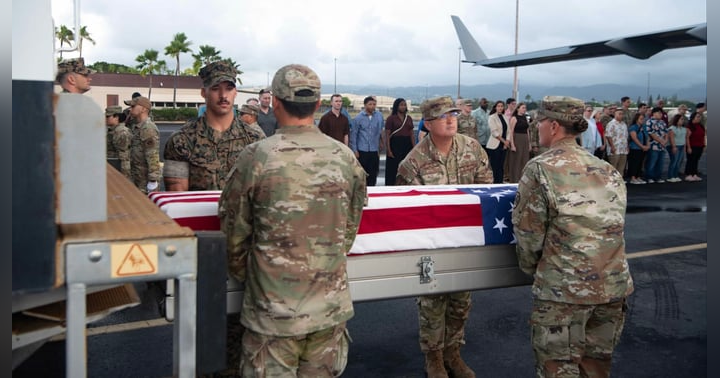
A Sacred Homecoming: Honorable Carry Ceremony Ushers in New Era of Hope for Bataan Death March Families