A Sacred Homecoming: Honorable Carry Ceremony Ushers in New Era of Hope for Bataan Death March Families
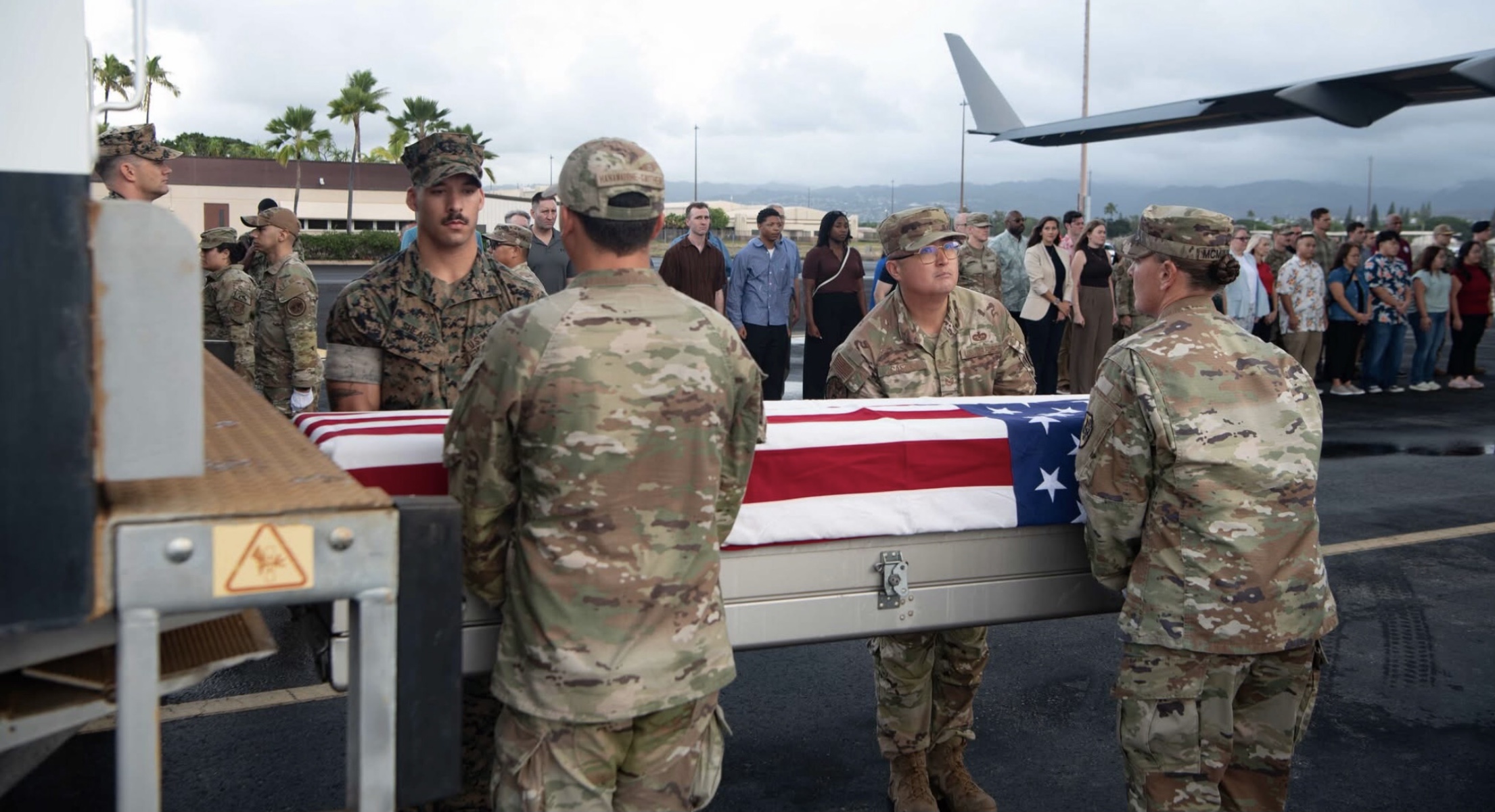
Photo Credits: US Army Staff Sgt. Keion Jackson
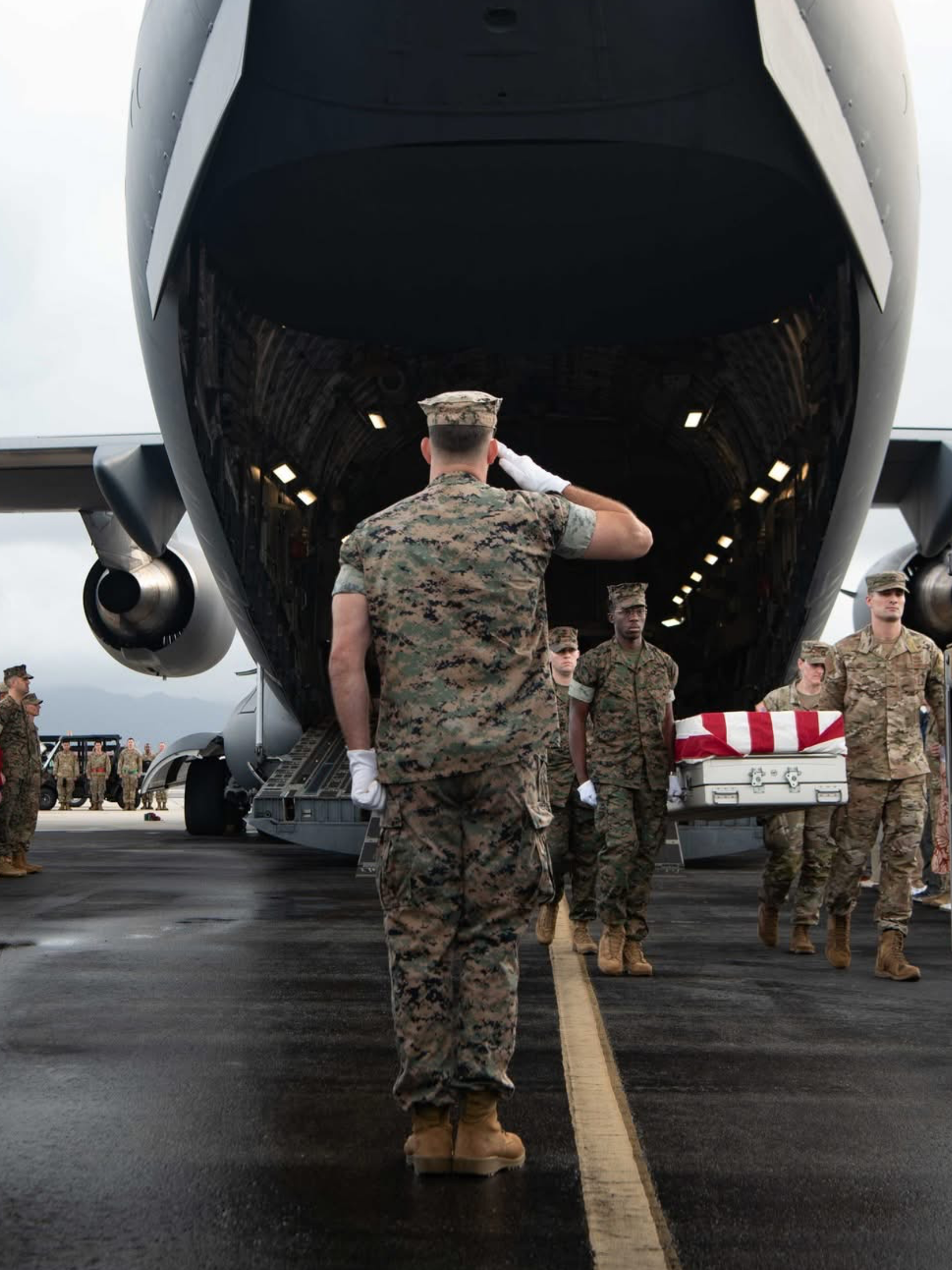
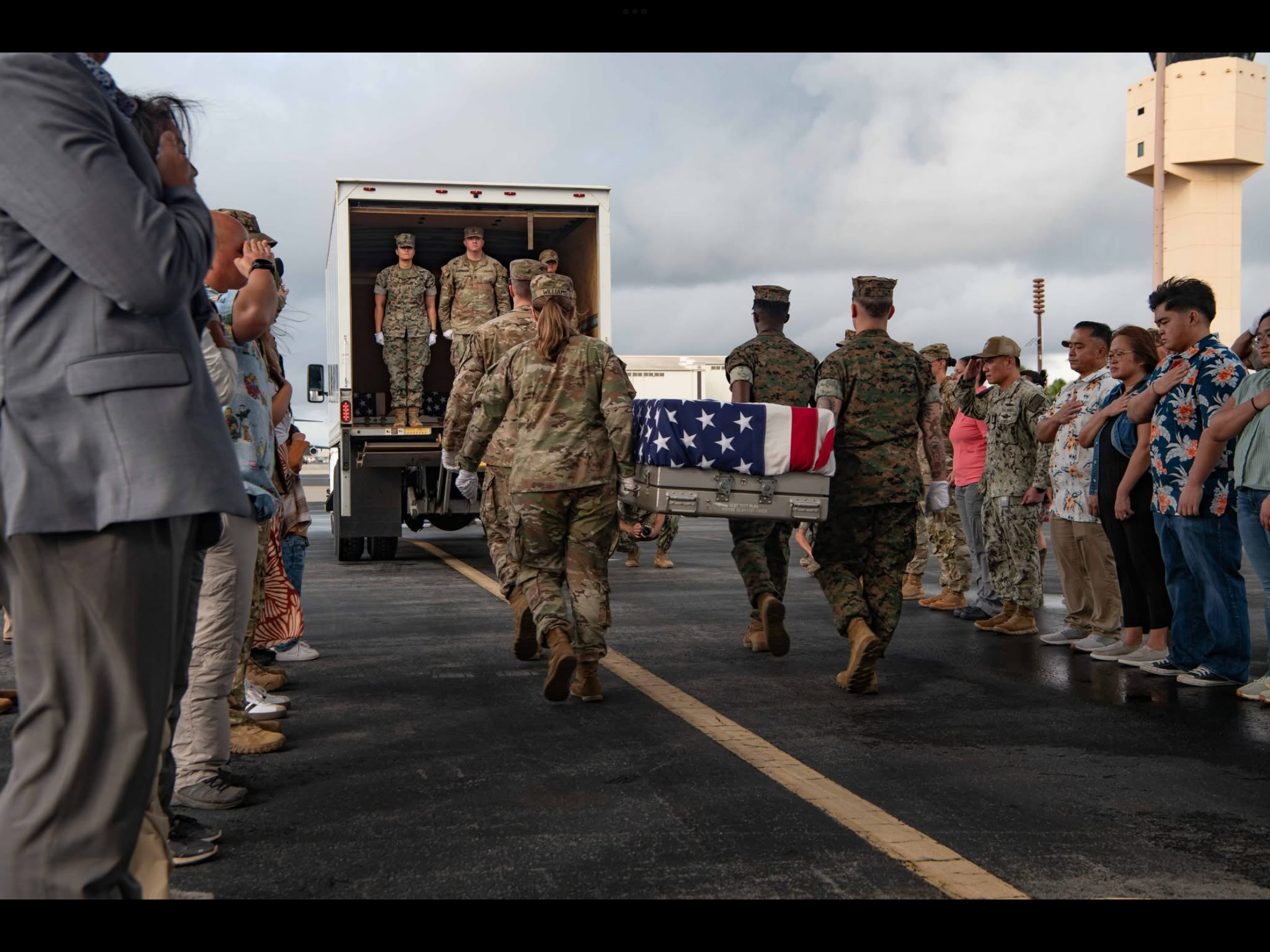
Today, December 16, 2025, marks a moment of profound reverence and renewed hope in the long, heart-wrenching quest to bring home the heroes of World War II. At Joint Base Pearl Harbor-Hickam, Defense POW/MIA Accounting Agency (DPAA) personnel gathered on the flight line for an Honorable Carry Ceremony, respectfully transferring 17 cases containing unknown remains disinterred from the Manila American Cemetery in the Philippines. These remains—silent witnesses to the atrocities of the past—now begin their forensic journey at the Daniel K. Inouye DPAA Center of Excellence, where dedicated scientists will work tirelessly to restore identities and provide the fullest possible accounting for our nation’s missing service members.
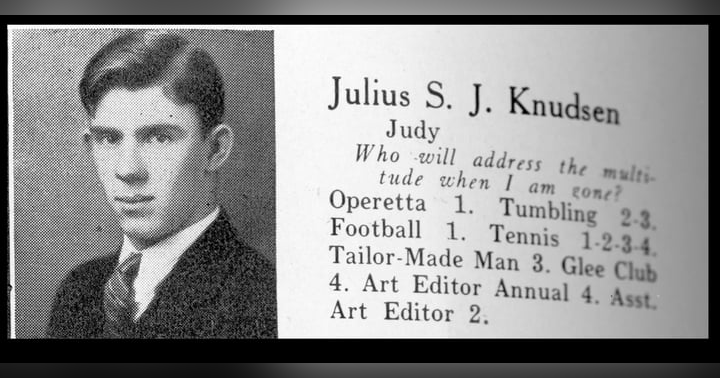
This ceremony isn’t just a procedural step; it’s a beacon of promise, cracking open the door to identifying hundreds more unknowns directly linked to the Bataan Death March. For families like that of Technician 5th Class Julius St. John Knudsen, who vanished amid the horrors of that infamous trek, this day brings a surge of emotion—tears of gratitude mixed with the ache of anticipation. As the host of the Stories of Sacrifice: American POW/MIAs podcast, I’ve been privileged to walk alongside Julius’s nephew, Jim Knudsen, in this journey. Our shared efforts, fueled by Jim’s unyielding love and my investigative research, have helped pave the way for this historic milestone.
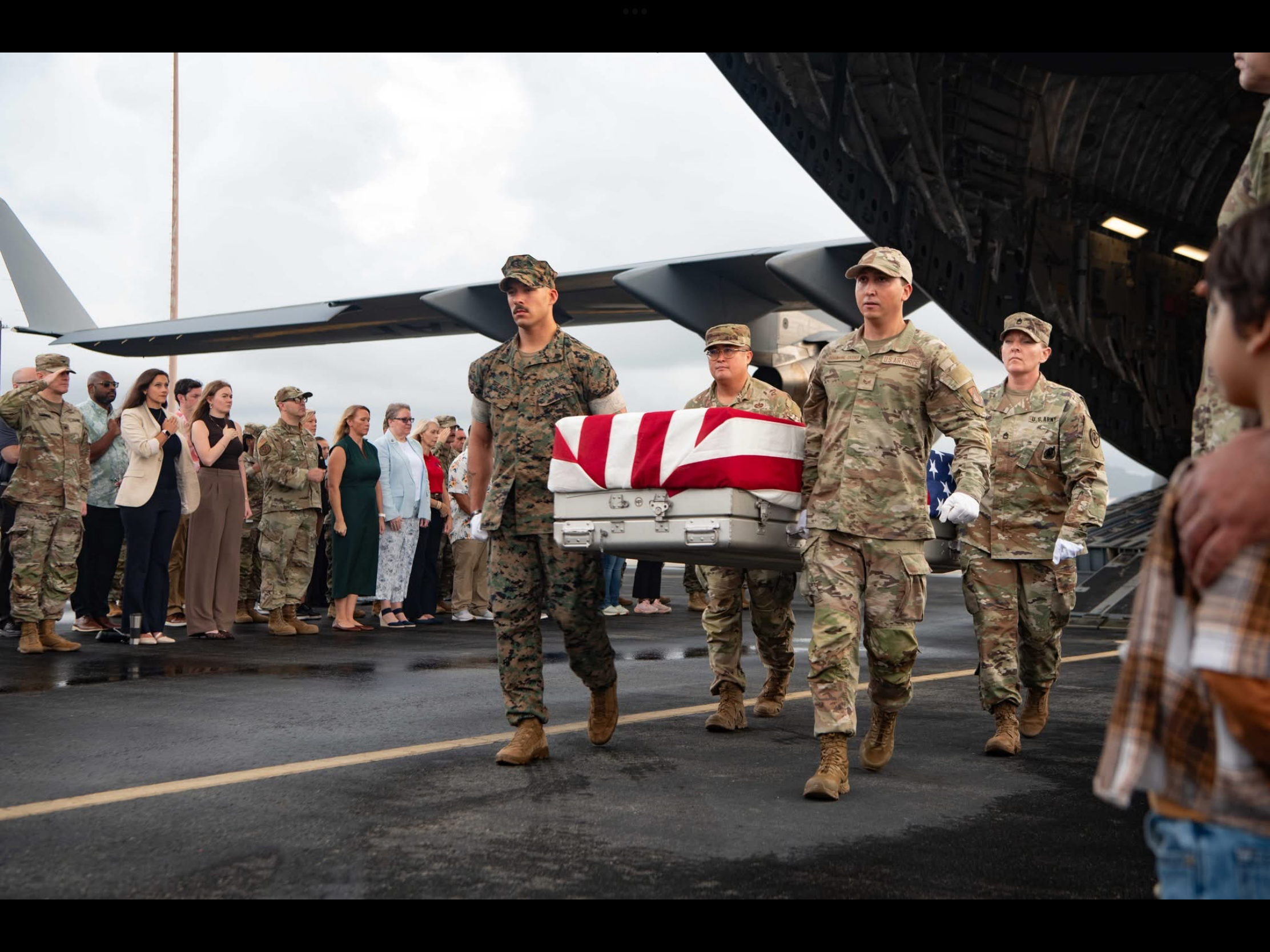
US Military personnel conduct the Honorable Carry Ceremony at Joint Base Pearl Harbor-Hickam, transferring remains to DPAA from the Manila American Cemetery. Photo Credits: US Army Staff Sgt. Keion Jackson
Recapping the Heart of the Story: Julius and the Shadow of Bataan
Born in 1916 in Brainerd, Minnesota, Julius St. John Knudsen was a spirited adventurer—a motorcycle-riding dreamer who enlisted in 1941 and found himself defending the Philippines as part of the 194th Tank Battalion. When Bataan fell on April 9, 1942, Julius endured the brutal 65-mile Death March, last seen near Lubao, Pampanga, desperately fleeing into the jungle under enemy fire. Conflicting reports suggested a death from dysentery at Camp Cabanatuan, but no body, no grave—only the designation of Missing in Action, leaving his family in limbo for over eight decades.
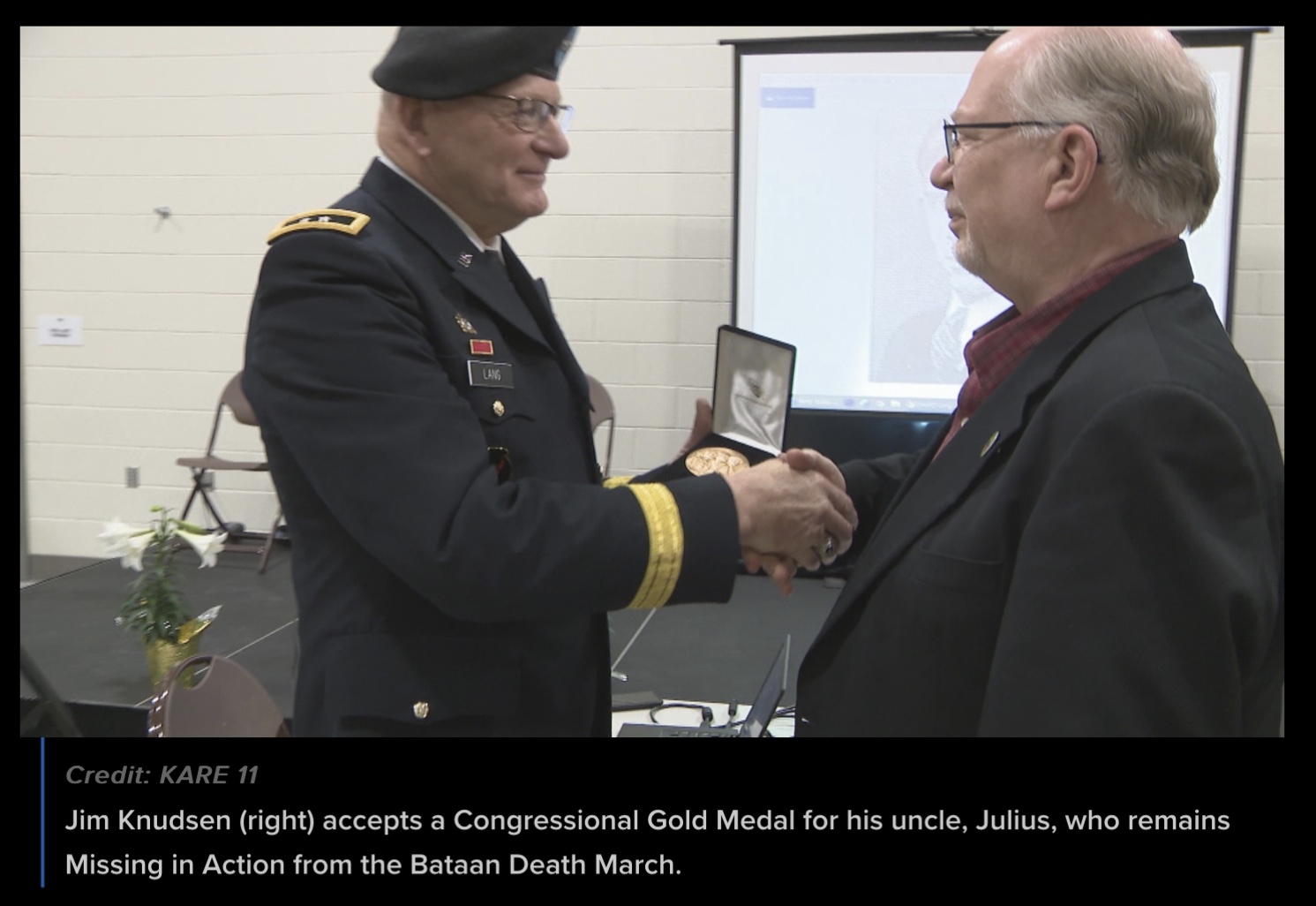
Jim Knudsen, born after his uncle’s disappearance, inherited this legacy of loss. Through faded letters, family lore, and a burning determination, Jim transformed grief into action: filing FOIA requests, attending DPAA briefings, and submitting DNA samples. His 2019 appearance on my podcast episode, “Stories of Sacrifice: POW/MIAs - Tec 5 Julius St. John Knudsen,” was a raw outpouring that resonated with thousands, amplifying the call for accountability.
Our Collaborative Triumph: From Podcast to Progress
That episode ignited my deeper involvement. As Chief Investigative Researcher for Asymmetric MIA Accounting Group (AMAG) Inc., I dove into archival records, survivor accounts, and forensic genealogy. We pinpointed nine unknown burials from the Lubao area—strong candidates for Julius and his best friend Pvt. Robert Doerck. Rallying families to submit Family Reference Samples (FRS) DNA, we surpassed DPAA’s 60% threshold, greenlighting the disinterments.
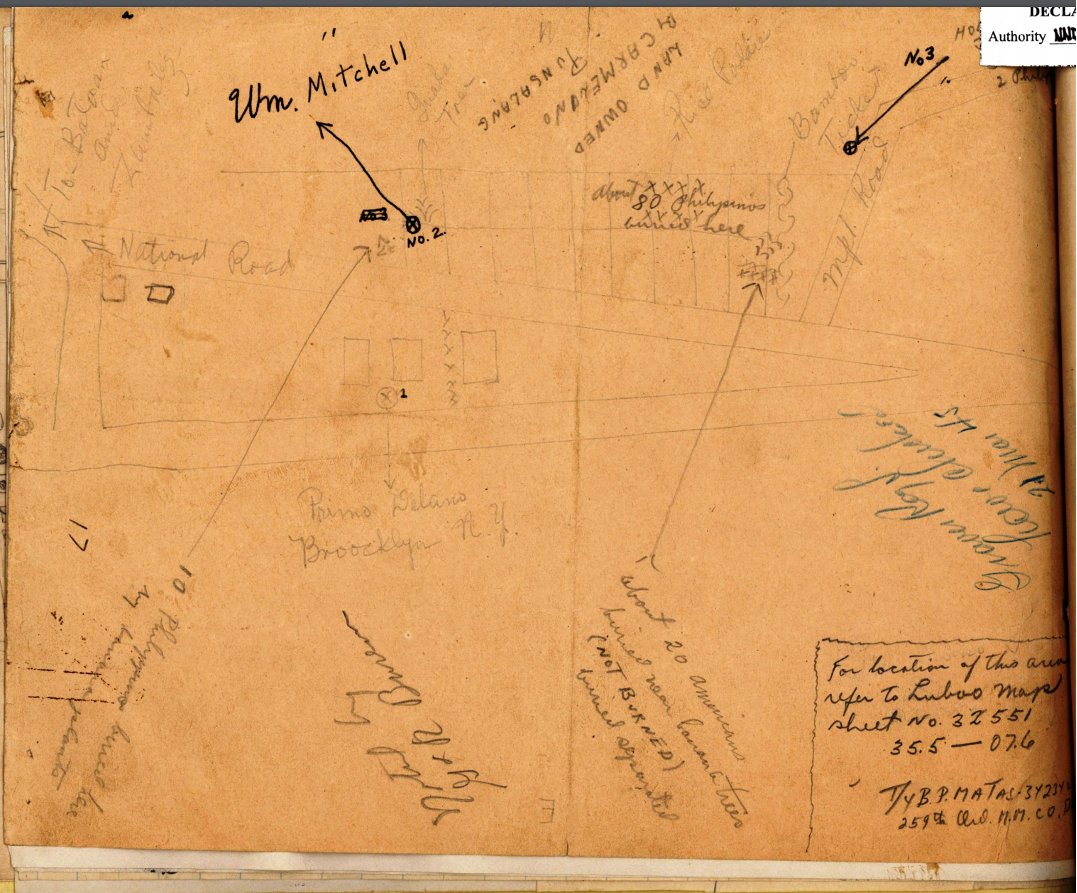
These nine are among the 17 remains honored today, with the additional eight linked to POW executions south of Manila in May 1942. But this is just the beginning. The Manila American Cemetery holds over 3,600 unknown graves, with approximately 1,473 U.S. personnel from the Philippines still unaccounted for. Our work has spotlighted over 500 unknowns directly associated with the Bataan Death March route—from Abucay to Balanga to Lubao and beyond. With DPAA’s pipeline filling with more Bataan-related proposals and potential field investigations along the march path, this ceremony signals a cascade of future recoveries. Families waiting for answers from the estimated 200 unknowns near Lubao alone can now dare to hope.
The Ceremony: A Moment of Solemn Dignity
Jim’s reaction? “Floods of emotion,” he shared, his voice thick with the weight of generations. This isn’t abstract science; it’s healing for souls like Julius’s family, who have prepared a gravesite at Camp Ripley, ready to welcome him home.
A Rallying Cry: Join the Mission to Honor the Forgotten
The Bataan Death March claimed thousands—up to 10,000 American and Filipino lives lost to starvation, disease, and cruelty, many buried in hasty, commingled graves. Projects like Cabanatuan and now this Bataan Death March initiative reveal the scale of the unresolved: echoes of sacrifice demanding recognition.
If you’re a descendant of a WWII MIA, act now—submit your FRS DNA through DPAA. It’s a simple swab that could unlock identities before time erodes evidence. Advocate for more funding, DNA-led processes, and private partnerships to accelerate exhumations. Contact your representatives; every voice amplifies the urgency.
Julius, your legacy lives on. Jim, your devotion has opened doors for so many. To all waiting families: Hold fast—the light of closure is breaking through. 🇺🇸
At AMAG, our 501(c)(3) nonprofit relies on your support to fund these efforts. Donate, volunteer—especially Veterans—or learn more at https://amagonline.org. Together, we’re not just recovering remains; we’re restoring dignity, mending hearts, and ensuring no hero fades into oblivion. - It’s About Time ⏳
For the full backstory on this breakthrough, read my earlier post: https://www.storiesofsacrifice.org/blog/bringing-home-the-heroes-the-heart-wrenching-journey/.
AMAG Information Sheet for Media: https://docs.google.com/document/d/1_MFSkCztN0C-_F3gavNgQ2nHIIOo2njj/edit?usp=drivesdk&ouid=100308543996930517952&rtpof=true&sd=true
John Bear
Chief Investigative Researcher
Asymmetric MIA Accounting Group (AMAG) Inc.
Listen to Jim’s powerful story that sparked it all: https://www.storiesofsacrifice.org/stories-of-sacrifice-powmias-tec-5-julius-st-john-knudsen-ep02/.
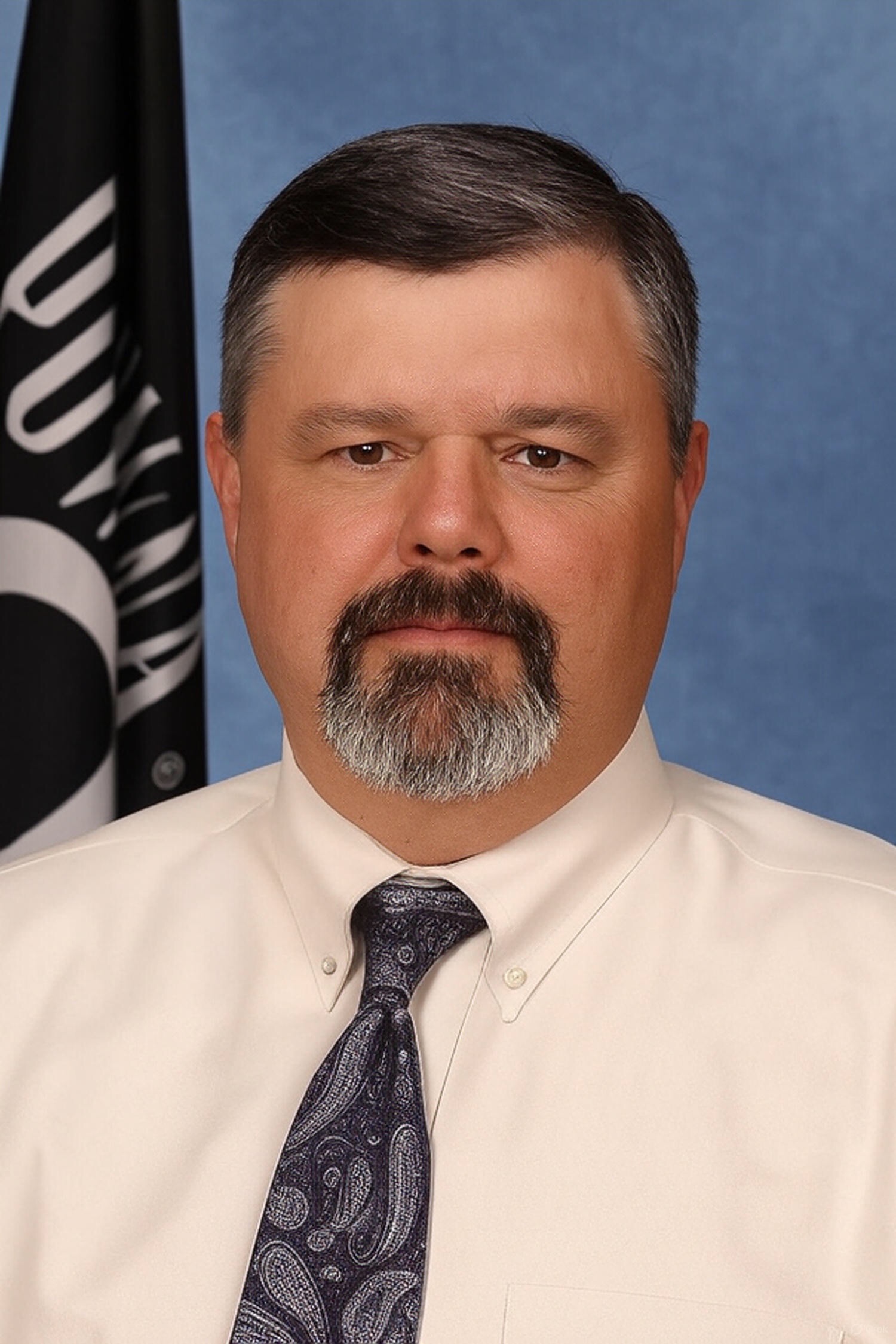
Investigative Researcher & Host of Stories of Sacrifice Podcast
John Bear is an accomplished investigator and forensic genealogist with over 20 years of experience specializing in World War II, Korea, and Vietnam War POW/MIA cases. He has honed forensic-level skills in open-source intelligence (OSINT) and archival research, bolstered by coursework in Advanced Research Methods and Databases for Historians. Inspired by the loss of his uncle, a WWII POW/MIA identified posthumously in the Philippines, John volunteers directly with families of the missing to provide answers and closure. As a key member of the Asymmetric MIA Accounting Group (AMAG), he works directly with MIA families to support projects alongside Military Service Casualty Officers, DPAA Historians, and military intelligence experts. Through his contributions to the Cabanatuan POW Camp, Philippine Hellship Project, and Bataan Death March, John’s efforts have led to over 350 potential WWII identifications through Family Reference Sample (FRS) DNA collection. His investigation into the Vietnam War’s Baron 52 incident uncovered compelling OSINT-based evidence suggesting crew survival, and his work on WWII unrecovered MIAs on Mindanao has generated critical leads. Through his podcast, Stories of Sacrifice: American POW/MIAs, John amplifies families’ stories, ensuring the legacies of the missing are honored.
Baron 52 Docu series Podcast Link: https://www.storiesofsacrifice.org/category/baron-52/
Bringing Home the Heroes: The Heart-Wrenching Journey to Uncover Julius St. John Knudsen and Honor the Forgotten Souls of the Bataan Death March